
Semiconductor Packaging
Low-alpha alumina and high-purity silica support packaging systems where impurity, conductivity, and particle-size control are critical.

Applications
SRP's spherical powders support electronic packaging, thermal management, CCL, EMC, aluminum-based CCL bonding sheets, advanced ceramics, engineering plastics, coatings, and customized functional filler systems.
| Industry Area | Example Application | Relevant Powder Platform | Why It Matters |
|---|---|---|---|
| Electronics | Electronic packaging fillers and resin systems | SP spherical silica, LA low-alpha alumina | Supports impurity control, particle distribution control, and resin compatibility. |
| EMC | Epoxy molding compound for semiconductor packaging | SP3/SP4 silica and LA alumina | Balances low conductivity, low alpha requirements, and filler flow behavior. |
| CCL | Copper-clad laminate filler systems | SP3 and SP4 spherical silica | Useful where dielectric materials need controlled particle size and stable filler loading. |
| Aluminum-Based CCL | Bonding sheets and prepreg layers for aluminum-based copper-clad laminates | Spherical silica and alumina filler options | Supports thermal, mechanical, and processing requirements in bonding layers. |
| Functional Fillers | General filler systems for resin, plastic, and composite formulations | Surface-treated silica and alumina | Surface chemistry and particle size can be tuned for compatibility and loading. |
| Engineering Plastics | Filled plastic compounds | SP silica and custom treated grades | Improves filler dispersion, processability, and property tuning. |
| Coatings | Functional coating formulations | Submicron spherical silica | Provides a controllable spherical filler platform for coating performance design. |
| Ceramics | Ceramic membranes, transparent ceramics, sintered ceramic parts | DC and DCS spherical alumina | High purity, sphericity, and submicron control support forming and final properties. |
| Petrochemicals and Catalyst Materials | Petroleum refining, petrochemical processing, and catalyst manufacturing | High-purity, spherical alumina and silica with controlled particle size | Helps optimize catalyst pore structure, active-component dispersion, mechanical properties, and processability. |
Low-alpha alumina and high-purity silica support packaging systems where impurity, conductivity, and particle-size control are critical.
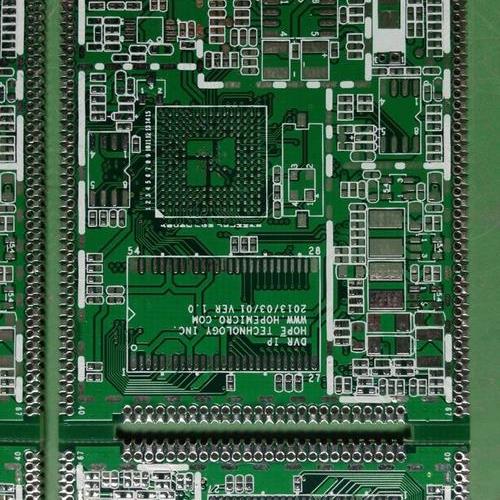
Spherical silica grades can be used in copper-clad laminate and resin systems that require stable filler loading and controlled particle distribution.
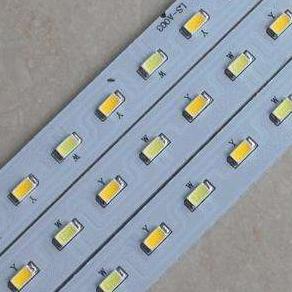
Alumina and silica filler options can support bonding sheets and thermally managed board structures such as LED aluminum-based substrates.
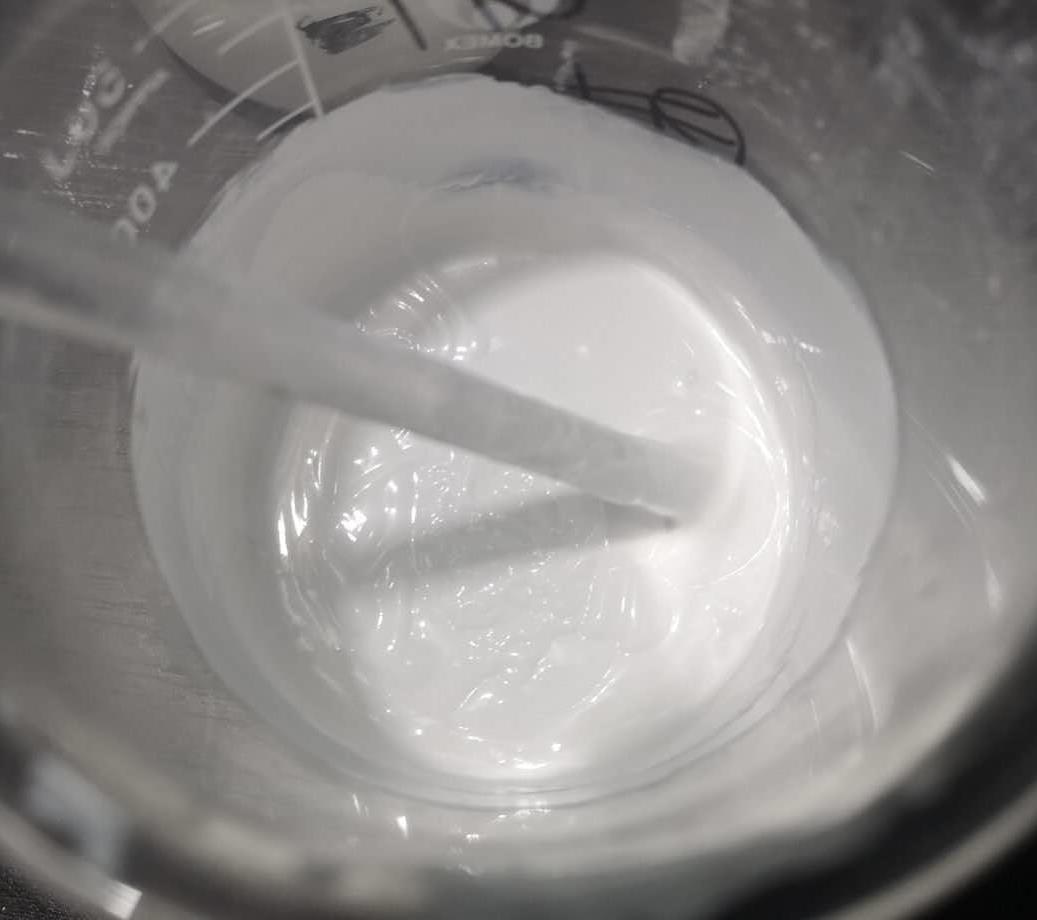
DC3-U and DC3-M alumina grades support high-filled silicone oil, gel, potting, and thermal pad formulations.
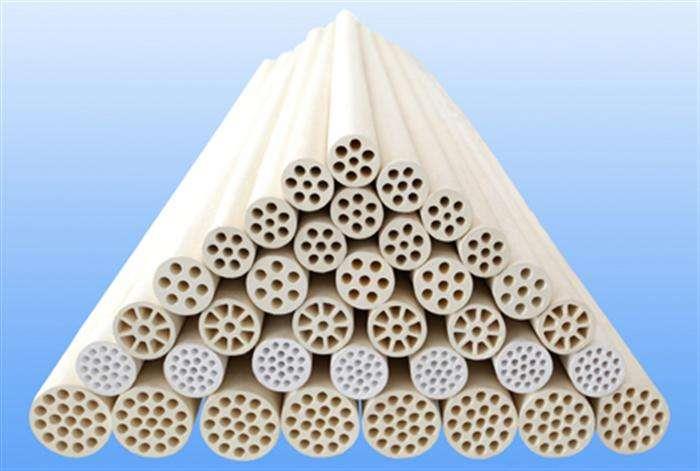
DC3-S spherical alumina is positioned for ceramic membrane systems where particle control and forming consistency matter.
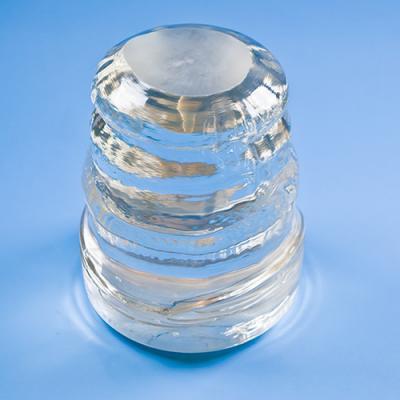
DC4-U high-purity alumina supports sapphire crystal feedstock needs with purity and furnace-loading advantages.

DC3-U can support lightweight, drop-resistant, high-hardness ceramic backplate applications.
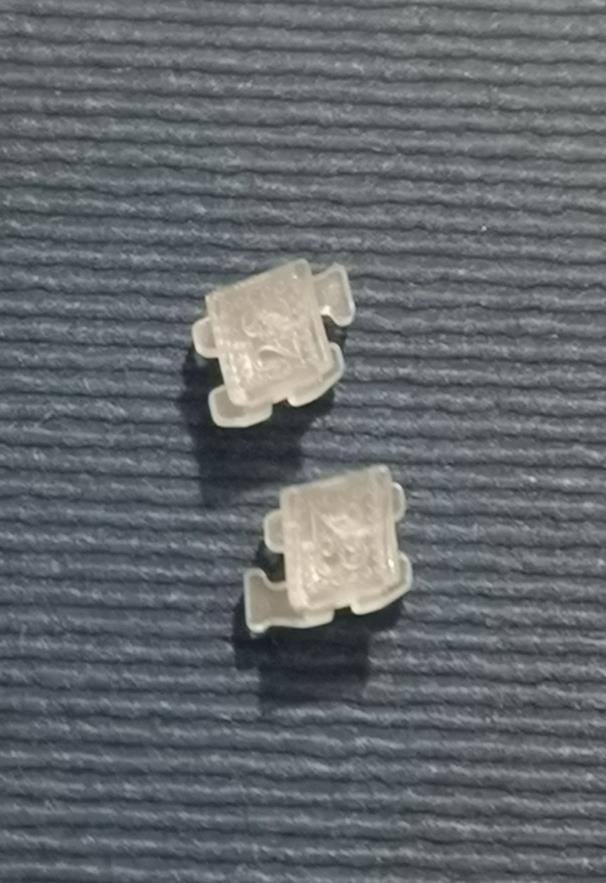
Submicron spherical alumina supports ceramic slurry and forming routes for fine-feature ceramic parts.
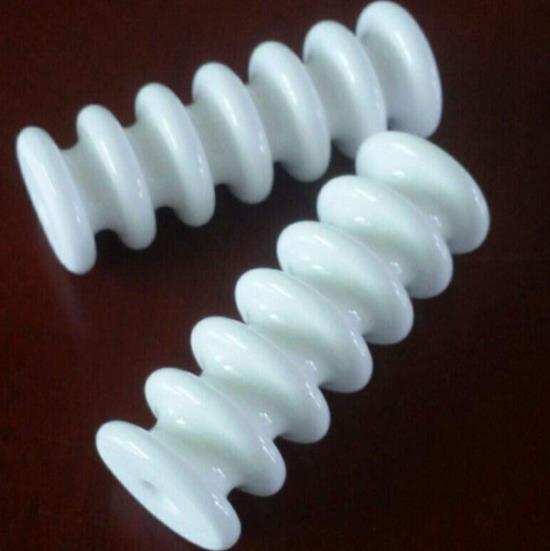
DCS easy-sintering alumina is aligned with dense ceramic components such as textile ceramic guides and wear parts.
| Application Area | Relevant Grade Or Blend | Application Detail | Capability Demonstrated |
|---|---|---|---|
| Thermal fillers and TIM | DC3-U with 5 micron and 40 micron spherical alumina | Example blend changes from silicone oil:5 micron:40 micron = 1:3:6 to silicone oil:DC3-U:5 micron:40 micron = 1:1:3:6. | Improves flowability, alumina loading, thermal conductivity, filling performance, and thermal resistance. |
| High-filled thermal systems | DC3-M; 10 micron:0.2 micron = 8:2 | Large and small particle sizes are paired so small particles fill voids between smooth larger particles; example silicone oil:DC3-M = 1:6. | Shows particle-packing design for high filler loading and reduced heat-transfer resistance. |
| Ceramic filtration membranes | DC3-S | Positioned for ceramic filter membrane applications. | Demonstrates submicron spherical alumina control for ceramic membrane forming. |
| Transparent ceramics | DC3-F / DC4-F | Supports injection molding and casting routes for transparent ceramic applications. | Submicron particle size supports small grains; spherical morphology supports high solids and flow; high purity supports transmittance. |
| Ceramic phone backplates | DC3-U | Used as an alumina powder option for ceramic mobile-phone backplate systems. | Targets lightweight, drop-resistant, high-hardness ceramic components. |
| Sapphire single crystal | DC4-U | Applied to sapphire single-crystal feedstock needs. | High purity and easy furnace loading support crystal growth preparation. |
| Sintered ceramic components | DCS easy-sintering alumina | Listed for textile ceramics, medical ceramics, and ceramic structural parts. | Dense sintering behavior, including source-deck sintered density above 3.9 g/cm3. |
| Additional listed use cases | DC alumina and SP silica platforms | Includes lithium-ion battery separators, ZTA ceramics, ceramic 3D printing, engineering plastics, coatings, EMC, CCL, and aluminum-based CCL bonding sheets. | Shows that the product portfolio spans thermal management, electronics, ceramic forming, and functional filler markets. |
Low-alpha, high-purity, and submicron silica and alumina grades are positioned for packaging systems that require impurity control, particle-size stability, and reliable filler behavior.
Epoxy molding compound systems can use spherical silica and low-alpha alumina where particle distribution, conductivity, and radioactive impurity control matter.
Spherical silica grades support copper-clad laminate formulations.
LA alumina grades are aligned with HBM and LPDDR packaging applications where U+Th levels and metallic impurities must be tightly managed.
Submicron spherical alumina can be blended with micron-scale spherical alumina to improve filler packing, flowability, thermal conductivity, and thermal resistance in TIM systems.
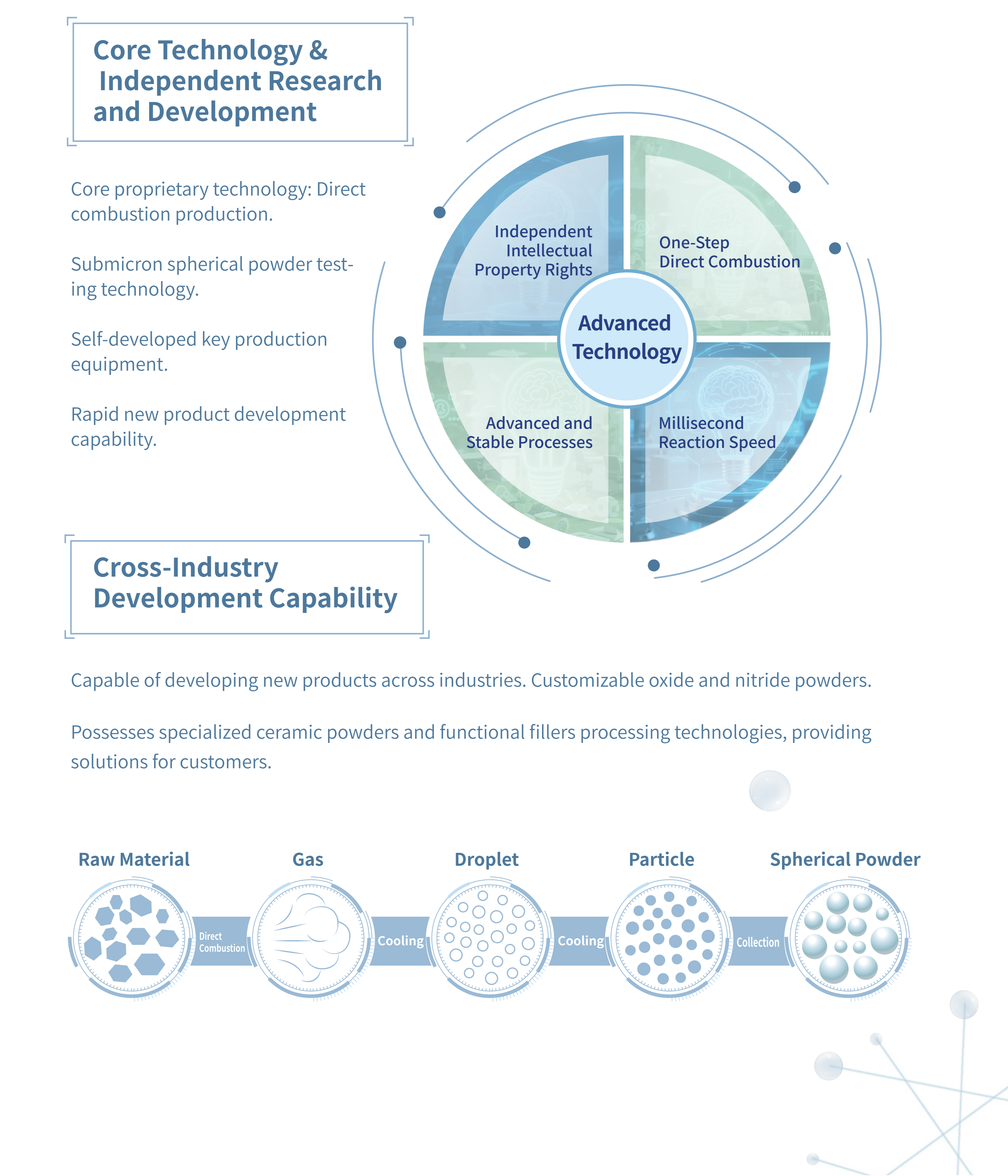
High-purity spherical alumina creates value where particle shape, purity, flow, and sintering behavior affect ceramic forming and final properties.
| Application | Relevant Material | Material Advantage |
|---|---|---|
| Ceramic filtration membranes | High-purity spherical alumina | Controlled submicron particle size and high sphericity for ceramic membrane systems |
| Transparent ceramics | Submicron spherical alumina | Small grain size from submicron particles, high solid loading from spherical morphology, and high transmittance enabled by high purity |
| Sapphire single crystal | High-purity alumina | High purity and easy furnace loading |
| Sintered ceramic components | DCS easy-sintering alumina | Designed for dense sintering behavior, including sintered density above 3.9 g/cm3 in the source table |
Spherical silica also supports non-packaging filler systems where resin compatibility, flow, particle distribution, and surface treatment determine formulation performance.
SP silica grades can be tuned by size and surface treatment for filler loading and process compatibility.
Submicron silica provides a controllable spherical filler platform for coating formulations.
SRP can develop customized oxide and nitride powder solutions across industries using specialized ceramic powder processing technology.
SFAM provides high-purity, spherical alumina and silica powders with controlled particle sizes for petroleum refining, petrochemical processing, and catalyst manufacturing. With excellent sphericity, flowability, dispersibility, and tunable surface characteristics, these materials can serve as catalyst-support feedstocks, functional additives, and composite-support components to help optimize catalyst pore structure, active-component dispersion, mechanical properties, and processability.
Suitable for catalyst-support and functional-additive systems for hydrofining and hydrotreating processes.
Suitable for materials-system design related to heavy-oil processing and catalyst-bed protection.
Can serve as support feedstocks, functional additives, or composite components in FCC catalyst formulations.
Alumina and silica materials support the development of silica-alumina composite supports and hydrocracking catalyst systems.
Suitable for development of catalyst-support feedstocks and functional components for polyolefin catalysts.
Porous alumina and silica materials can be used to develop petrochemical adsorbents, desiccants, and process-purification materials.
Potential applications include: